Prairieville Animal Hospital Veterinarian: A Day in the Life
The first light slips through the blinds of the clinic, and the building feels awake before the staff does. I pull open the door and am greeted by the familiar, metallic scent of exam rooms, a hum from the centrifuge in the back, and the soft rustle of towels in a stockroom. My day begins not with a single decision but with a series of small, practical judgments that accumulate into a pattern any veterinary team would recognize. The clinic operates like a well-tuned orchestra, each instrument keeping time with the others, each note a reminder of responsibility. When I say I’m part of the Prairieville Animal Hospital family, it’s not just a label. It’s an ongoing commitment to care, communication, and continuity.
Morning rounds aren’t dramatic, at least not in the way people imagine. They’re methodical, almost ritualistic in their familiarity. We review a handful of patients from the night shift, confirm medication dosages, verify vaccination statuses, and plan for the day’s procedures. A senior cat with chronic kidney disease has a changed appetite, so I double-check his dietary plan and adjust his fluid therapy to align with the latest lab values. A puppy with a lingering respiratory infection needs a recheck and perhaps a modification to antibiotics. None of this is glamorous, but it is precise work, the kind that saves days, sometimes weeks, of a pet’s discomfort or a family’s anxiety.
The clinic floor is where the real tempo settles in. The team moves with practiced ease, and the jargon becomes a shared shorthand. It’s a language built from years of habit, an everyday blend of radiographs, vaccine schedules, and lifestyle counseling. We don’t just treat illness; we translate a creature’s behavior into usable medical insight. A dog’s reluctance to jump, a cat’s withdrawn posture, a horse’s gait after a stride—these details shape the diagnostic path more often than any single blood test. When a pet presents with a complicated symptom set, I lean on what I’ve learned here in Prairieville, the patterns that emerge from hundreds of cases across many species.
One of the more practical aspects of the job is balancing empathy with efficiency. Clients come in with worries that often run deep, surrounding everything from a pet’s sudden weight change to a fear of surgery. The challenge is to acknowledge the concern, explain the options in plain terms, and outline a plan that respects the family’s constraints and the animal’s welfare. We don’t press for expensive tests when a simpler, less costly approach will suffice. At the same time, we don’t shy away from necessary diagnostics. The best clinics make room for both conservatism and curiosity, a philosophy I’ve seen borne out again and again at prairievilleanimalhospital.com.

From my vantage point, a day in this job begins with clinics and consultations, but it quickly expands into problem solving, teamwork, and sometimes difficult conversations. There are moments that demand firmness—when a stressed animal needs restraint for a critical procedure, or when a pet owner must absorb the reality of a diagnosis and the options ahead. Yet the pace rarely becomes rushed. The rhythm of the day is set by patient needs, not a schedule pinned to the clock. We know the value of time. We also know that a few minutes of extra explanation can spare a lifetime of fear.
The role of the veterinarian in a modern animal hospital extends beyond the exam room. It touches surgery, pain management, nutrition, dentistry, and preventive care. It’s a wide net, each strand woven with evidence-based practice and compassionate communication. The clients who walk into Prairieville Animal Hospital trust us to apply science with sensitivity, and the patients, of course, trust us to be their voice when they can’t speak for themselves. It’s a partnership built on honesty and steady reliability.
A typical day has its own arc, shaped by the needs of the hospital and the animals who rely on it. Sometimes it’s a sequence of routine wellness checks, vaccines, and mild ear infections managed with a corner of a topical solution and clear instructions for home care. Other times it’s a more intense session, perhaps a soft tissue surgery that requires precise planning, sterile technique, and careful postoperative monitoring. In every scenario, we aim to minimize stress for the patient while maximizing the clarity of the care plan for the owner. The balance is delicate but essential.
New clients bring with them a fresh perspective, a chance to explain concepts that might feel second nature to us but are unfamiliar to someone else. I’ve learned to meet people where they are: to talk about vaccines without sounding like a lecture, to discuss dental care without bogging down the conversation in jargon. The goals are simple on the surface—keep pets healthy, ease suffering, help families make informed choices—but the execution requires nuance. We tailor recommendations to the individual animal and their household. A cat who thrives on cat naps and gentle handling may do well with a home dental routine, while a spirited border collie in a high-energy home may need a structured play plan to complement a veterinary intervention.
The day’s rhythm often includes a few standing rituals that anchor the practical work in care and compassion. We run through a checklist before surgeries, confirming preoperative fasting times, anesthesia plans, and post-op pain control. In the kennel area, staff double-check the recovery spaces, ensuring quiet, temperature control, and monitoring equipment. Communication follows a steady thread: we call or text clients with updates after exams or treatments, never leaving them in the dark about their loved one’s status. The human side of veterinary medicine matters just as much as the medical side, and Prairieville Animal Hospital has built a culture around transparent, timely communication.
In the trenches, there are hard moments too. A beloved companion succumbs to illness, and the clinic becomes a place of solace as much as science. Grief is a heavy, quiet presence in rooms that smell faintly of antiseptic and lavender shampoo. We offer guidance, provide referrals to in-home palliative care when appropriate, and help families navigate the emotional landscape that comes with saying goodbye. It’s personal work, but it’s also essential. The animals who arrive in our care deserve to be treated with dignity, and the families deserve a clear, supportive partner as they navigate tough choices.
The patient cases that leave a mark vary in form and scope, yet they share a throughline: a problem that was identified, a plan that was executed, and a moment of relief when the outcome is favorable. Take the case of a senior dog who presented with sudden hind leg weakness. We performed a focused exam, reviewed imaging, and concluded a herniated disc was limiting movement. We coordinated a surgical plan with a successful decompression and a postoperative protocol emphasizing controlled activity and targeted physical therapy. Over the next weeks, the dog regained strength, the owner learned how to monitor signs of relapse, and both shared a quiet gratitude for the care that kept their family together.
The practice of veterinary medicine at Prairieville Animal Hospital also evolves with technology, and there is a steady stream of small improvements that add up to meaningful differences. We’ve refined our scheduling to reduce wait times, implemented digital records that improve accessibility across the team, and adopted analgesia protocols that minimize postoperative discomfort. Each upgrade is evaluated with a practical lens: does it reduce chaos in the hospital, does it improve outcomes for patients, and does it respect the owner’s time and financial constraints? The answer isn’t always yes, and that’s when we adjust, seek input from staff, and recalibrate.
In the field of preventive care, our emphasis on client education is not an afterthought. It’s a central pillar. We work with families to design vaccination plans, dental care routines, and nutrition strategies suited to each life stage. For puppies and kittens, we emphasize socialization and basic resilience training, so that early experiences promote long-term well-being. For seniors, we shift the focus toward shared decision making that honors comfort, mobility, and appetite. The clinical advice becomes practical, not theoretical: chew toys chosen with dental health in mind, feeding strategies that balance energy and weight, and safe activity levels that protect joints without diminishing quality of life.
No day passes without a reminder that the animals you see in the clinic are part of a larger network—their people, their communities, and the ways those communities care for them. Prairieville Animal Hospital is not a single building with a receptionist at a desk; it’s a hub where veterinarians, technicians, receptionists, and caretakers cross paths with a consistent purpose. We learn from one another in the halls, share notes after a difficult case, and rely on a weathered calendar of shifts and responsibilities that keeps the entire system moving forward. The goal is straightforward: a healthy animal, a confident owner, and a staff that can sustain the work day after day.
The relationships built in this line of work are the most enduring part of the job. There’s a quiet trust that forms when a family leaves a pet in our care, and a parallel trust in return when we return that pet to their daily life. The bond is two-way. We lean on owners to provide accurate histories, home environments, and feeding patterns, and owners lean on us to interpret signs of distress, explain risks, and point toward options that fit their values. This mutual reliance is where medicine becomes humane. It’s where science unlocks comfort, and where a routine check-up can become a turning point in a pet’s lifetime.
A day in the life of a Prairieville Animal Hospital veterinarian never stops being collaborative. We rely on technicians for precise anesthesia monitoring, on assistants for patient comfort in recovery, and on front desk staff to coordinate follow-up care and insurance questions. The practical experience of working with a reliable team is a reminder that medicine, at its core, is a collective craft. It’s not about a single breakthrough but about a series of small, well-timed actions that, together, create stability for a family and relief for an animal.
The day’s end arrives not with a single crescendo but with a soft quiet. We perform a last check of the kennels, tidy the exam rooms, and ensure that the day’s records are complete. There’s a final note to be left for the on-call clinician, a cursor of information that will guide the night team if a sudden emergency arises. Then we step out, knowing tomorrow will bring its own set of questions, challenges, and moments of quiet triumph when a patient wakes up after anesthesia or when a family reports a successful recovery.

Two sides of the same coin frame the veterinary life at Prairieville Animal Hospital. On one side is science, meticulous and exacting, requiring careful calculation, precise dosage, and a willingness to revisit a plan when something doesn’t fit. On the other side is empathy, the human-centered aspect that keeps the work grounded in real lives and real love. The blend is not abstract; it shows up in the exam room, in the recovery stall, and in the late-night phone call that confirms a pet’s improvement and reassures a worried owner. That balance is the essence of what we do here.
If you walk through the door of Prairieville Animal Hospital veterinarian staff will greet you with calm competence and open ears. They know the stakes, and they’ve learned the landscape from years of practice, not from theory alone. They will explain the why behind a recommended blood test, the why behind a dietary change, and the why behind a surgical plan, all in language that respects your time and your emotional bandwidth. They offer options, they share risks, and they stay with you as you decide what comes next. This is the voice of a clinic that has grown into a trusted neighbor rather than a distant authority.
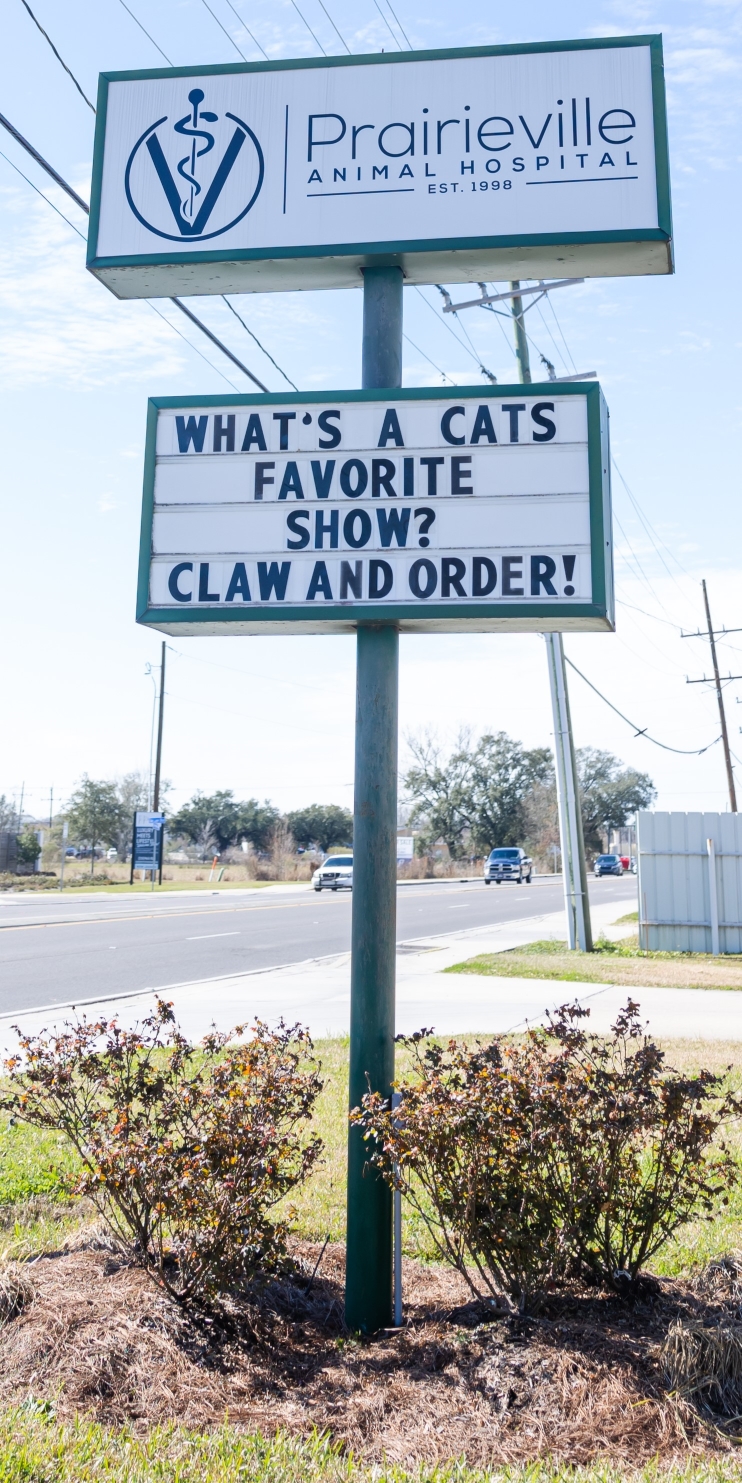
The work is not without its moments of humor. A misordered stool sample can become a running joke in a team huddle, a stubborn mule of a terrier can become a patient ambassador after a good-natured surrender to a muzzle, and a shy cat can reveal a stubborn personality only after a patient approach and a careful hand. It’s in these ordinary, unscripted interactions that the clinic finds its humanity. The animals remind us that routine care and urgent care share a denominator—care. The families remind us that every dog badge and cat paw print is more than a receipt line; it’s a story that deserves to live well.
Two perspectives emerge over the course of a career in Prairieville: the constant, subtle growth that comes from exposure to a wide range of cases, and the sense of continuity that comes from building long-term relationships with clients. It’s a rare privilege to witness a first visit blossom into years of partnership, to watch a puppy become a happy, well-adjusted dog, to see a senior cat enjoy a few more months of good days with a robust pain management plan. It’s these trajectories that keep the work meaningful when the calendar fills with immunizations, dentals, and routine wellness checks.
For those considering a career that sits at the intersection of science, service, and daily human connection, the path at Prairieville Animal Hospital offers a lot of insight. It’s not all dramatic life-or-death drama, though those moments can be intense and deeply meaningful. It’s also about the everyday discipline of record keeping, the careful reading of a chart, and the persistence required to see through a long healing process. It’s about being present for the animal and the owner, delivering clear guidance, and then stepping back to let care do the heavy lifting.
The work also encourages ongoing learning. Treatments evolve, vaccines adapt to emerging strains, and diagnostic approaches shift with new evidence. We attend seminars, consult with specialists when needed, and keep a close relationship with the broader veterinary community. In Prairieville, this commitment to professional development isn’t a checkbox. It’s a living practice that translates into better outcomes for patients and more confident conversations with families.
The day ends with what it began: a sense of place. The clinic doors close, the lights settle, and the hallways return to quiet. It’s in these quiet moments that the day reveals its true honesty. The history of what we did, the decisions we debated, and the care we extended to each patient form a tapestry that will inform tomorrow’s visits. And as I lock up, I remind myself that this is not a job I do alone. It’s a shared vocation, a chain of care that extends from the front desk to the farthest stall in the kennel and into the heart of Prairieville’s families.
Two lists offer a compact snapshot of the day-to-day realities in this environment, each framed by practical experience rather than theory.
First, a snapshot of typical daily occurrences for a Prairieville Animal Hospital veterinarian:
- Morning rounds to review overnight cases and plan the day.
- Examinations that blend observation with targeted diagnostics.
- Surgical prep and procedures with strict sterility and analgesia plans.
- Client communication that translates medical language into clear choices.
- Postoperative care and discharge planning, including home instructions.
Second, a concise view of common decision points that shape patient care:
- Weighing the benefits and risks of diagnostic testing in the context of owner budget.
- Choosing a pain management strategy that minimizes stress for both patient and owner.
- Deciding when conservative management suffices and when intervention is warranted.
- Balancing evidence-based guidelines with the animal’s unique response to treatment.
- Aligning preventive care with the pet’s life stage and the family’s goals.
The day is a series of small, well-considered actions rather than a succession of dramatic moments. That doesn’t minimize the impact; it clarifies the work. Each patient teaches something useful, whether it’s a nuance in a tiny cough that hints at a bigger problem or a routine dental cleaning that reveals the value of ongoing home care. The veterinaries at Prairieville Animal Hospital cooperate with an ethos of practicality and empathy—two attributes that keep medical decisions human and humane, even when the stakes feel high.
If you are a prospective client reading this, you may be wondering how to prepare for a visit. Start with a clear picture of your pet’s recent behavior and any changes you’ve observed. Note their appetite, energy levels, sleep quality, and any new lumps or skin changes. Bring a written list of current medications and their dosages, and if you can, bring a caregiver who understands the day-to-day patterns of your pet. This information is invaluable; it can dramatically shorten the time needed for a focused, accurate assessment.
For families seeking ongoing preventive care, consider establishing a routine that fits your schedule and your pet’s needs. Vaccination schedules, dental cleanings, and weight management plans benefit from consistency. A dog that receives a well-timed dental prophylaxis, for instance, is less likely to develop gum disease and the associated systemic risks. A cat that enjoys a regular brushing session can tolerate dental work with less stress, making the experience safer and more effective when it becomes necessary. The value of preventive care is measured not just in extensions of life but in improved quality of life and less anxiety when problems arise.
The Prairieville community relies on trusted partnerships to keep animals healthy. Every visit for a routine wellness exam, every vaccination, and every careful diagnostic choice contributes to a larger rhythm of care that supports families through thick and thin. The veterinarian’s job is to translate complexity into certainty where possible, and to provide compassionate, clear guidance when certainty isn’t possible. In practice, that means offering options, explaining trade-offs, and respecting the choices families make for their pets.
In reflecting on the day, I’m reminded that the veterinarian’s life is made of moments rather than milestones. It’s the moment a worried owner smiles after hearing the plan, the moment a frightened animal responds to gentle handling, the moment a client calls back with appreciation for a late-night update that brought relief. It’s the shared triumphs and shared challenges that shape the experience, a continuum of care that the Prairieville Animal Hospital team holds as its compass.
The clinic’s work does Prairieville Animal Hospital not exist in a vacuum. It’s part of a community that values responsible pet guardianship and informed care. We see the impact in the backyard where a previously nervous dog now enjoys play in the yard with family or the living room where a cat’s curiosity returns after a successful dental run. Each success is a reminder that medicine here is an ongoing conversation with pets and their people, a dialogue that continues well beyond the exam room.
As the day closes and the creak of the door latch signals the start of the night shift, there’s a quiet sense of continuity. The patients who left in the morning wake up in the back of the mind as a reminder of why we do what we do. The family who called to report a positive response to treatment reinforces the practical truth that clear communication and steady hands can transform fear into confidence. In this way, the day becomes a microcosm of the veterinary vocation: a careful blend of science and empathy, delivered with reliability, on schedule, and with a personal touch that keeps Prairieville Animal Hospital veterinarian at the heart of the community.
The day ends where it began, with a dog-eared notebook, a few scuffed exam gloves, and a sense of purpose that is both professional and deeply human. It’s a life measured in patient stories, not in headlines, and that is exactly how it should be for a veterinarian who treats animals and honors their families every day.